
Home / Services / Attic Insulation
Residential & Commercial
Attic Insulation in Hartland, WI
Attic insulation and air sealing that stop winter heat loss and ice dams in Hartland and the Lake Country.
Attic insulation in Hartland has one main opponent: the Wisconsin winter. From November through March, the heat you pay for rises toward the ceiling, and any weakness in the attic floor lets it escape into the cold space above. Hartland sits in IECC climate zone 6A, a heating-dominated region where attics need far more depth than most homes carry and where air leaks at the ceiling plane do as much damage as thin insulation. Hartland Spray Foam Insulation installs attic air sealing and insulation built for deep-winter performance, the kind that keeps heat in the rooms you live in and keeps the roof deck cold enough to prevent ice dams.
Why Hartland attics leak heat all winter
Warm air is buoyant, and every penetration in the ceiling plane gives it a path out. Recessed lights, bath fan housings, attic hatches, top plates, plumbing and wiring chases: each one acts like a small chimney pulling heated air into the attic all season. Many Hartland homes built before 1990 still carry original insulation that has settled well below its rated depth, and even newer Lake Country construction often stops at minimum code. The stack effect compounds the problem: as heated air escapes high in the house, cold outdoor air is drawn in low, so a leaky attic drives drafts on the main floor at the same time it drives up the gas bill.
Ice dams start in the attic, not on the roof
An ice dam is a heat-loss symptom. When escaping heat warms the roof deck, snow melts from underneath and runs down to the cold overhang at the eaves, where it refreezes into a ridge of ice. Water backs up behind that ridge, works under the shingles and shows up as stained ceilings and wet wall insulation, often weeks after the first snow. The durable fix is not heat cable or roof raking. It is keeping the roof deck cold by sealing the air leaks feeding it and insulating the attic floor to cold-climate depth. We treat ice dam complaints as an attic diagnostic first, and the estimate spells out which leaks and which depth shortfall are driving the melt pattern on your roof.
R-60 depth: blown-in floors versus roof deck foam
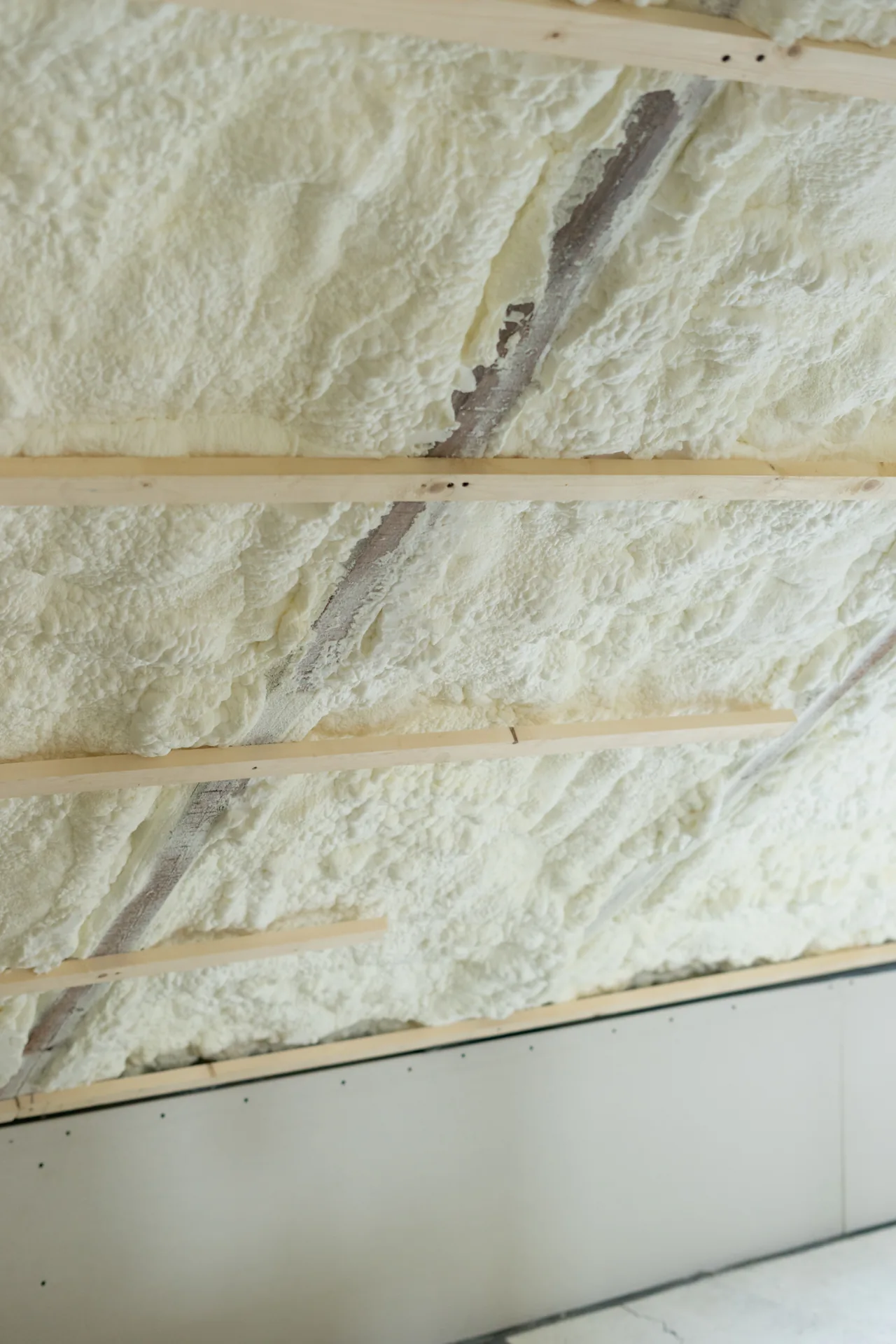
There are two sound approaches, and the right one depends on how the attic is used. If the attic is a vented, storage-only space, the cost-effective move is air sealing the ceiling plane and blowing fresh blown-in insulation to a measured depth targeting R-60, the level zone 6A attics call for. If the attic holds ductwork, houses equipment, or is headed toward finished space, insulating the underside of the roof deck with spray foam converts it to an unvented, conditioned assembly that keeps both the ducts and the space inside the thermal envelope. We quote both paths in writing when a home could go either way.
Ventilation protects the whole assembly
Adding depth at the attic floor only performs if the ventilation path stays intact. Soffit vents must remain open, baffles belong in each rafter bay at the eaves so blown-in material cannot choke the airflow, and the ridge or roof vents need a clear exit. In a snowy Lake Country winter, a well-ventilated, well-insulated attic keeps the roof deck uniformly cold, which is exactly what prevents both ice dams and the frost that forms on nail tips in under-insulated attics. When we foam the roof deck instead, the venting strategy changes by design, and we walk you through that difference before any work is scheduled.
Attic insulation estimates in the Lake Country
Every attic estimate starts in the attic. We measure existing depth, check the ceiling plane for air leaks, look for frost or moisture staining on the underside of the deck, and verify the ventilation path before recommending anything. You get a written, itemized scope naming the material, the installed depth and the areas covered. Call 262-403-8625 or use the quote form to schedule a free visit. We serve Hartland and the surrounding Lake Country, including Sussex, Pewaukee and Delafield, and we also handle crawl space insulation when the project extends below the main floor.
Questions
Common questions
Will attic insulation stop my ice dams?
Ice dams form when escaping heat melts snow on the roof and it refreezes at the cold eaves. Sealing the air leaks at the ceiling plane and bringing the attic to cold-climate depth keeps the roof deck cold, which removes the melt cycle that feeds the dam. We inspect for exactly those failure points before quoting.
How much insulation does a Hartland attic need?
Hartland is in IECC climate zone 6A, where attics target roughly R-49 to R-60, far more than most older Lake Country homes have. We measure what is there and quote the added depth needed in writing.
Should I insulate the attic floor or the roof deck?
A vented, storage-only attic usually gets the best value from air sealing plus blown-in depth at the floor. If ducts, equipment or future finished space live in the attic, spray foam at the roof deck brings that volume inside the conditioned envelope and is often the better assembly.
Want to know what your attic project would cost?
Tell us about the home and we will measure the attic before quoting anything.
Free written estimates • No obligation • Local team
Explore more
Other insulation services
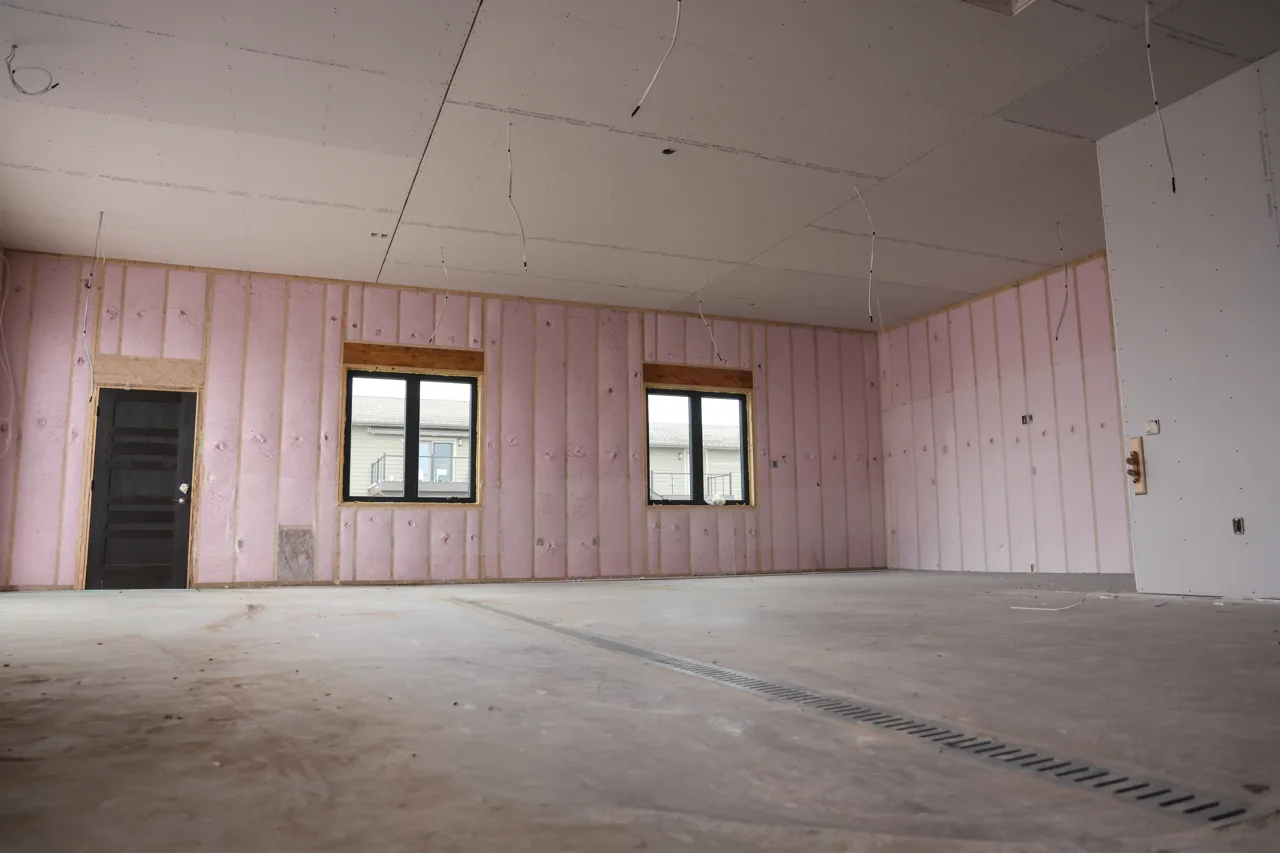 Blown-In InsulationBlown-in cellulose and fiberglass for cold-attic floors and retrofit walls, installed to a measured depth at a lower cost than foam.Explore service →
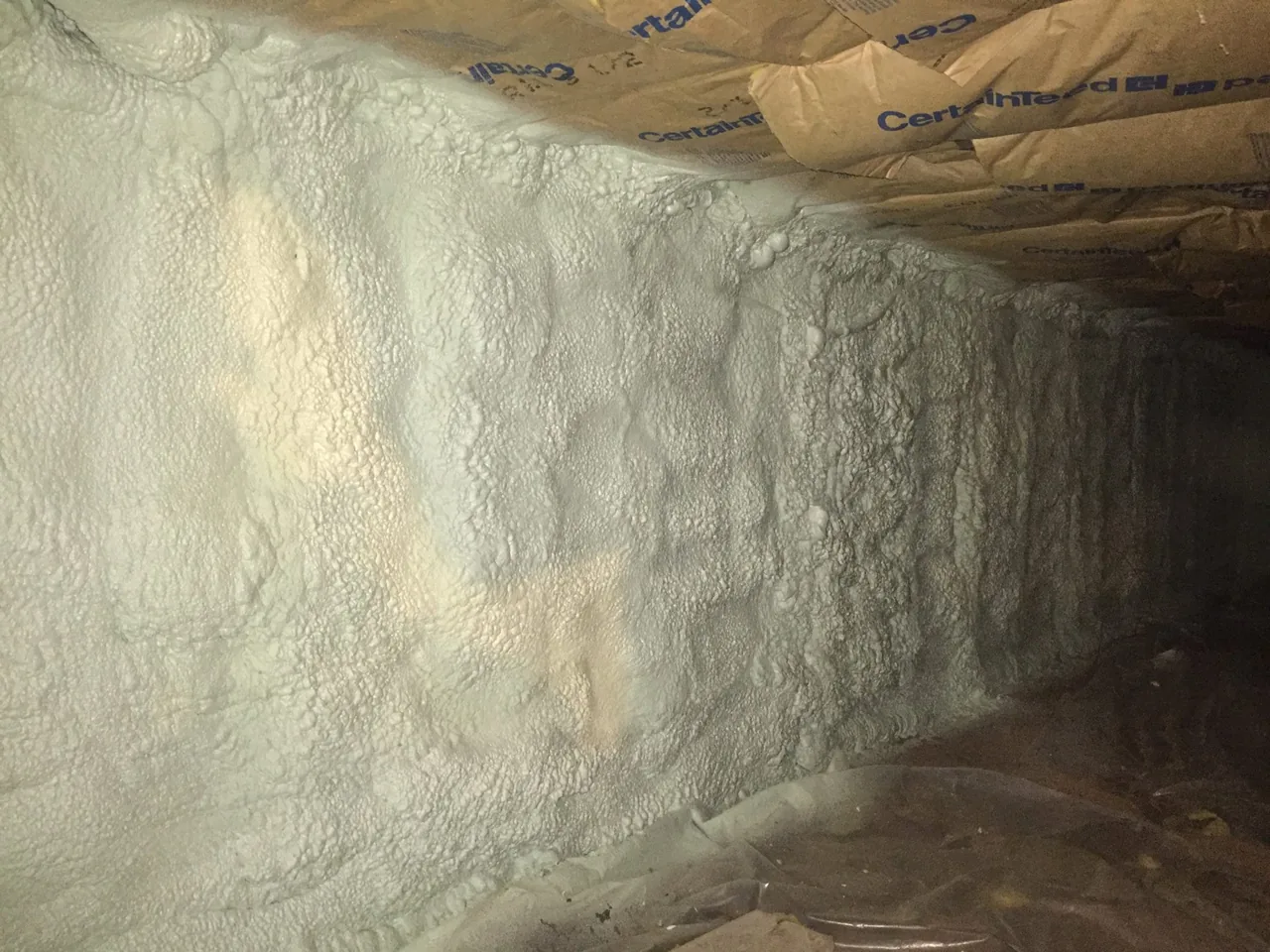 Crawl Space InsulationInsulation and air sealing for cold Wisconsin crawl spaces, addressing frozen pipes, cold floors and winter air leakage.Explore service →